
猎场
How a Chinese game scholar connects ancient texts with modern play_我的网站

一 | 8 月 25 日上午消息,昨日,拼多多发布最新财报,在电话会上,拼多多集团联席董事长兼联席 CEO 赵佳臻透露,“今年的第二季度是我们新十年高质量发展从开局起步到纵深推进的新阶段。

二 |
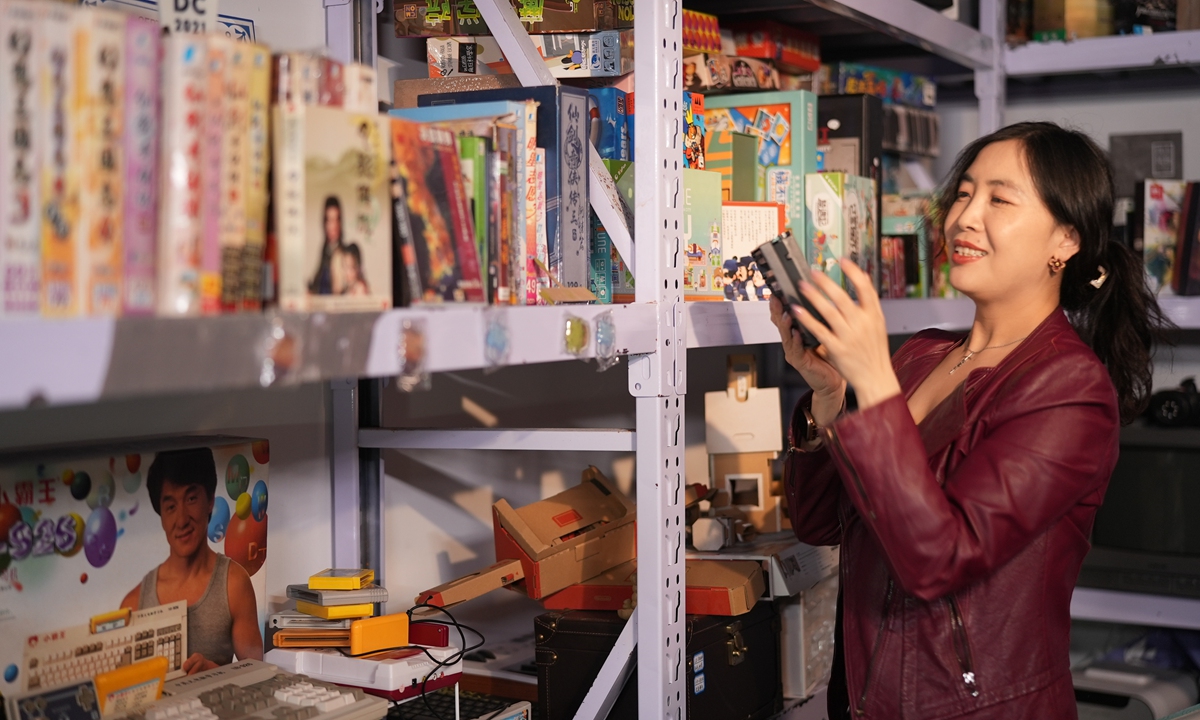
Inside Beijing's Homoludens Archive, shelves are filled with books, game consoles, game cartridges and other materials tracing the history of video games. For Liu Mengfei, the archive's director and chair of the academic committee of the Gamification Professional Committee, these collections preserve more than the evolution of games, they also capture the cultural memories of a generation.
A PhD in history from Tsinghua University, Liu has spent more than a decade studying the social impact of games, the role of games in history and digital humanities. Throughout her career, she has continued to explore the relationship between games and people: Why do humans create games? And how do games shape culture and society?
Books, meanwhile, have been an important gateway through which Liu has come to understand the world of games.
"The real value of a book lies not simply in what it tells you, but in whether it can change the way you understand the world and people," Liu told the Global Times.
Books meet games
In 2007, being an undergraduate history student, Liu wrote her thesis on the links between ancient Celtic religion and modern digital games.
To study original sources such as The Gallic War by Roman author Julius Caesar, she taught herself Latin. As her research extended into modern games, she also began reading the rulebooks of Dungeons & Dragons, a tabletop role-playing game.
"From historical texts to game rulebooks, these reading experiences seemed to belong to completely different worlds, but they gradually led me to realize that games are not simply entertainment products. They also contain history, culture and the relationships between people and society," she said.
Later, Homo Ludens, by Dutch historian Johan Huizinga, further transformed the way she understood games. The book gives a theory that humans are not only Homo sapiens, or "rational beings," but also Homo ludens, or "playing beings," and that games are deeply intertwined with human culture, from language and art to religious rituals and sports.
The book had a profound influence on her. It points out that the foundations of human society — language, civilization, religious rituals, sports and art, are all connected to play and games, because we are Homo ludens, "the playing human."
"The idea prompted me to view games from a broader perspective," Liu said. "Games are not an appendage outside human civilization, but are deeply connected to cultural creation and social life."
"It also showed me that games and game-based thinking could extend into broader fields, including education and technology," she added.
She later read other works on game studies, including Play Between Worlds: Exploring Online Game Culture, Half-Real and Rules of Play Game Design Fundamentals. Play Between Worlds, in particular, opened up another possibility for game studies at a time when discussions about "internet addiction" were prevalent in China.
"Games are not simply a form of entertainment that needs to be restricted or criticize;. they can also serve as important media for storytelling, cultural expression and exploring relationships," she said.
These reading experiences gradually shifted Liu's focus from simply asking "What are games?" to a deeper question: What can games bring to people?
Beyond time and technology
Periodically, Liu still returns to Homo Ludens in her free time, finding new insights from the book as society changes. In the age of artificial intelligence, she has revisited one of its fundamental questions: As AI becomes increasingly capable of handling repetitive tasks and surpasses humans in efficiency, what does it mean to be human?
"As AI takes over more monotonous and repetitive work, the time freed up should be devoted to creativity, experience and human relationships," she said. "The time we gain should actually be used to become better at 'playing humans.'"
For Liu, this also requires people to maintain their ability to think, imagine and reflect -- abilities that cannot be gained through simply receiving information. This has also prompted her to reconsider the meaning of reading.
In an era when AI can quickly summarize an entire book, Liu believes people still need to read the original works in full, because the value of reading lies in more than simply acquiring knowledge and conclusions.
"Reading a book is like a form of cultivation. You have to immerse yourself in it, patiently allow the author to take you on a journey, and find your own island along the way," she said.
For Liu, the value of reading is not limited to books on paper. As media evolve, so do the ways people encounter stories and understand culture. Some digital works are now becoming new vehicles for reading.
Chinese-developed games such as Genshin Impact contain hundreds of thousands, and even more than a million Chinese characters of text, while Black Myth: Wukong uses its "Journal" system to tell the stories of individual monsters through written entries.
"Digital games are carrying forward traditions inherited from literature and film, becoming new gateways, through which young people can enter the worlds of literature, history and traditional culture," she said.
"An important reason why Black Myth: Wukong has succeeded in communicating Chinese culture is that it does not simply insert traditional cultural symbols into a game. Instead, it draws on the original Journey to the West, contemporary works inspired by the classic, as well as the game's own rules and interactions, allowing players to develop a new understanding of traditional culture through their actions," she noted.
For Liu, the forms of reading may change, but the desire to understand the world and discover oneself will not. From books to digital worlds, what matters is not only what people read or play, but how they think, create and find meaning through these experiences.
。我们长期坚持的千亿扶持惠商战略,逐步从投入期进入收效期,平台及产业生态效用加速释放,供需两侧均实现质效升级。同时我们继续稳步地推进三年再造拼多多重大战略。”谈及品牌自营战略最近进展,赵佳臻表示,“品牌自营业务是我们在长期供应链投资方向上的一个重要延伸,我们也希望与有能力、同时有意愿的制造企业建立深度的产品共创关系,发挥平台在市场洞察、全球渠道方面的能力,提升产业链的品牌化发展和价值创造的确定性,并且把这些增量价值能实实在在地带给整个产业链。

三 | ”他谈到,在推进节奏上,在初期,我们会有选择地在平台和供应链具备独特优势的核心品类上进行生根、与制造业企业长期的合作,共同参与产品定义、研发、质量标准和市场验证。

四 | 尽管这块业务需要较长的培育与磨合周期,它的启动所需的时间也相较最初的预期更长,但是这是平台明确的、长期的战略方向。我们会保持耐心,把每个环节都做到位。我们对品牌自营的长期前景有信心。

五 | 关于具体的运营策略方面,赵佳臻直言,“平台开放和公平的底层机制并不会发生改变。我们始终认为,为消费者持续地提供优质的商品和服务离不开健康、公平、多元化的供应端生态。在未来,我们的品牌自营商品和第三方商家的商品将共同去满足消费者在不同场景、不同定位的多元需求,最终创造一个多方共赢的平台生态。
Current article:http://bke8.sunaichitikouchua.bond/47v7n/uu4d.html
Published on:14:18:16
我的网站相关内容
 'China travel' fuels 'China shopping' boom
 克莱新约:总薪资1150万 有球员选项&交易保证金
 Crane brought in to remove historic tree in England that was cut in act of vandalism
 Chinese expert warns Philippines not to mistake humanitarian accommodation for concession as Philippine military twists facts on Ren’ai Jiao resupply
 “十五五”开好局起好步|定州:加快建设农业强市 夯实兴农富民根基
 郑州社保卡新增旅游功能 热门景区实现“一卡通游”
- ·重磅应用密集上线,同时“硬刚”谷歌、亚马逊和Meta,OpenAI急了?今年要“烧”85亿美元
- ·雷军的99亿股权激励用途是公开的:全部用于慈善事业
- ·'Already Disturbing as F**k': Netizens Welcome New 'Game of Thrones' Spin-off 'House of the Dragon'
- ·英媒炒作伊朗发动网络攻击令英国电厂停摆4天
- ·奥克兰警方缴获数万纽币假钞,捣毁制假窝点,一名男子被捕
- ·热烈庆祝中华人民共和国成立75周年|祖国,生日快乐!
- ·Texas Governor Orders Arrest of Illegal Migrants as He Accuses Biden of ‘Refusing to Do His Job’
- ·Boxing Day购物真的更优惠吗?商场一早就挤满了人
我的网站最新内容
- ·知らずにたくさん食べてない?大根を食べ過ぎてはいけない人の特徴【管理栄養士による解説】
- ·定档!南马十年!2026南京马拉松开启报名,全新规则速看
- ·“中国荔乡”广东茂名今年荔枝出口收官
- ·微软官方商城春节:Surface Laptop 2降价1000元,Xbox One新产品上市
- ·直面停水催费、质价失衡、电梯隐患 杭州“公述民评”问政小区物业难啃的“硬骨头”
- ·六大行公告!优化中小微企业贷款贴息等业务 贷款上限提高至7500万元
- ·华硕 ROG 公布 Gladius IV Ace、Spatha X 65K 鼠标,搭载 65000dpi 传感器
- ·76人一夜4消息!詹姆斯影响5队引援,马克西苦练+14+2名单留后手
- ·泽连斯基:乌克兰不会寻求加入北约之外的替代方案
- ·太空算力技术创新中心在雄安成立
- ·追觅宣布聚焦四大主营业务方向,对部分处于探索阶段的业务进行调整
- ·政声直达丨河北省科技投资引导基金再获权威认可
- ·钟爱南方的跨境电商们,正在悄悄“北上”
- ·Canalys: 2022年第三季度全球智能手机出货量下降了9%
- ·桃李面包:上半年净利润1.45亿元,同比下降28.75%
- ·Israel reaches historic agreement with Lebanon
我的网站热点内容
- ·万物云2026年中期业绩:营收191.1亿元 同比增长5.4%
- ·车间一线:传统技工拥抱智能制造新赛道
- ·China-Europe freight trains gain momentum as Erenhot port handles 3,000th trip of year
- ·German Media Fears Putin Preparing New ‘Raw Materials Trap’ for West
- ·中超巨大争议!王秋明飞铲逃红,阿尔瓦罗险被废,媒体人开炮
- ·破纪录的伽马射线爆发可能标志着黑洞的诞生
- ·채명신 경기도의원, 경기국악원 지역밀착형 문화거점으로 활성화해야
- ·Record fine for Aus casino operator over money laundering
- ·iPhone之后,苹果Mac电脑的出货量下降。
- ·【现货】8月26日20#胶港口价格汇总
- ·前7个月广东综保区外贸进出口突破万亿元,前7个月广东综保区外贸进出口突破万亿元
- ·兴城房地产展示交易会成交额9000万元
- ·韵达股份 2026 年上半年归母净利润 9.98 亿元,同比增长 88.82%
- ·拼多多运营干货:从0到1,快速起店的实用策略
- ·贵州贵安发展集团有限公司原董事长罗佳玲被“双开”
- ·《The Witcher 3 Remastered》将于9月发售,所有原版玩家可免费升级